

The Rise of the Dark Factory: What Happens When Robots Do Everything?
The Future is Here: Robots Replacing Humans in Factories
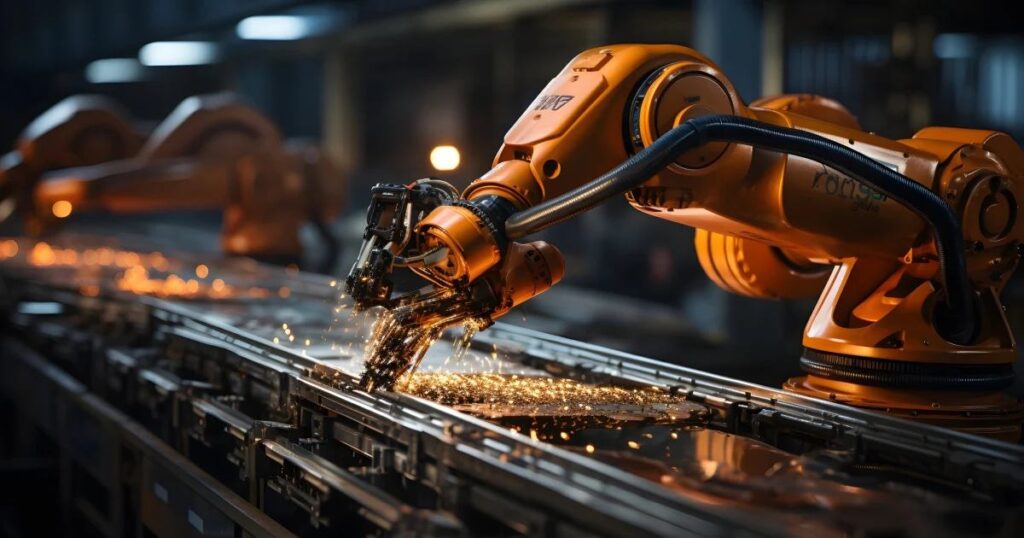
Robots replacing humans in factories is no longer a scene from a science fiction movie; it is becoming our daily reality. Across the globe, countries are investing heavily in “Dark Factories“—fully automated production plants where AI and machines handle everything from raw materials to finished products. In these spaces, lights aren’t even necessary because there are no human eyes to see them. While this shift promises a massive increase in production and a decrease in errors, it brings up a terrifying question: if machines do all the work, what will happen to us?
The Paradox of the Dark Factory
The concept of robots replacing humans in factories creates a massive economic loop that seems to lead nowhere. Companies want to remove human labor to save money and speed up production. However, humans are not just workers; they are also consumers.
If every company replaces its staff with AI, millions of people will lose their income. If people have no jobs, they have no money. If they have no money, they cannot buy the food, clothes, or gadgets that these robots are producing. This creates a “dead-end economy” where machines produce goods for a population that can no longer afford to buy them.
How Will Humans Earn Money to Survive?
One of the biggest worries regarding robots replacing humans in factories is the loss of the traditional “earn and spend” lifestyle. When a machine takes your job, your paycheck disappears. Experts are currently discussing several solutions to this crisis:
- Universal Basic Income (UBI): Some suggest that governments should tax the robots or the companies owning them. That tax money would then be distributed to all citizens as a monthly “salary” so they can afford food and services.
- A Shift to Creative and Emotional Roles: While robots are great at building cars, they aren’t great at being therapists, artists, or high-level philosophers. Humans may move away from “labor” and toward “creativity.”
- The Ownership Economy: Instead of working for a company, individuals might own small pieces of AI technology that generate income for them automatically.
What Will Humans Do on Earth?
If we no longer need to work 9-to-5 because of robots replacing humans in factories, the very definition of being a “human being” changes. For centuries, our identity has been tied to our jobs. Without work, humans will have to find a new purpose.
- Learning and Education: We might spend our lives learning for the sake of knowledge rather than for a degree to get a job.
- Human Connection: We could focus more on community, family, and helping others—things that have been neglected in the rush of the industrial age.
- Exploration: With time on our hands, humanity might focus on exploring the deep oceans or outer space.
The Challenge of the Consumer Crisis
As mentioned, the biggest hurdle to robots replacing humans in factories is the consumer crisis. If the consumer has no money, the factory has no reason to exist. Business leaders must realize that a 100% automated world requires a 100% new way of sharing wealth. We cannot use an 18th-century economic system (capitalism based on labor) in a 21st-century world (automation based on AI).
Conclusion: A Transition, Not Just a Replacement
The transition toward robots replacing humans in factories must be handled with care. If we simply replace people with machines without changing how money is distributed, we face a global collapse. But if we use this technology to free humans from “drudge work” while ensuring everyone has enough to eat through new social systems, we could enter a new golden age.
We must stop asking “How can we replace the worker?” and start asking “How can we support the human?”