
Indian Household Gold Savings: The Real Pillar of Economy
Indian household gold savings are much more than just a piece of jewelry or a fashion statement. In India, gold represents a deep-seated social security system. Currently, Indian homes hold approximately 27,000 tonnes of gold, with an estimated value exceeding 170 lakh crore rupees. This massive wealth is greater than the entire GDP of many countries worldwide.
For an average Indian family, gold is the first line of defense during a crisis. A farmer in a village will mortgage his jewelry at a bank before touching anything else. A middle-class family prefers to sell gold rather than break a fixed deposit during an emergency. Indian household gold savings are the silent engine of our social safety net.
Gold Imports vs. Crude Oil Expenses
There is a growing narrative suggesting that citizens should stop buying gold because it drains our foreign exchange (dollars). However, the numbers tell a different story. While India imported about $62 billion worth of gold in 2024-25, the expenditure on crude oil imports reached a staggering $242 billion. This means we spend nearly four times more foreign currency on oil than on gold.
The dependency on foreign oil has actually increased. In 2014, India imported 77% of its oil; today, that figure has reached 85%. Despite talks of self-reliance, our reliance on foreign fuel is growing.
| Category | Expenditure / Data Point |
| Total Gold in Indian Homes | 27,000 Tonnes |
| Estimated Value of Private Gold | ₹170 Lakh Crore+ |
| Gold Import (2024-25) | $62 Billion |
| Crude Oil Import (2024-25) | $242 Billion |
| Oil Import Dependency (2024) | 85% |
| USD to INR Exchange Rate (2026) | ₹95+ |
Government Spending and VIP Culture
While the public is often advised to cut back on spending to save foreign exchange, the expenditure on government machinery and VIP facilities remains high. Between 2014 and 2025, over ₹2,300 crore has been spent on the Prime Minister’s foreign trips, chartered flights, and security arrangements.
Furthermore, the acquisition of the Air India One aircraft cost approximately ₹8,400 crore. The annual budget for SPG security has crossed ₹600 crore, and the Prime Minister’s Office (PMO) operates on a budget exceeding ₹700 crore per year.
| Government Sector | Annual / Total Budget |
| Air India One Aircraft Cost | ₹8,400 Crore |
| PM Foreign Trips & Security (2014-25) | ₹2,300 Crore+ |
| SPG Security Annual Budget | ₹600 Crore+ |
| PMO Annual Budget | ₹700 Crore+ |
| Salary & Perks of 788 MPs | ₹1,500 – ₹2,000 Crore |
| VIP Security Annual Spending | ₹2,000 Crore |
| Parliament Operations | ₹1,000 Crore+ |
The Burden on the Common Man
The question remains: who is expected to make the sacrifice? While ministers travel in convoys of 20 vehicles and stay in expensive Lutyens’ bungalows, the common citizen is told that buying two pieces of jewelry for a wedding endangers the economy. When a citizen rides a scooter, it’s a foreign exchange crisis, but when leaders move in fleets of BMWs and Fortuners, it is labeled as “development.”
Even the Reserve Bank of India (RBI) is consistently adding dozens of tonnes of gold to its reserves because central banks worldwide are losing faith in the dollar. If gold is a secure investment for the government, why is it considered “anti-national spending” for the public?
Understanding the Economic Model
A strong economy should strengthen the pockets of its people. However, today’s youth are struggling with unemployment, the middle class is buried under EMIs, and farmers are breaking under rising costs. Commercial gas cylinders have touched ₹3,000, and taxes on petrol and diesel remain at record highs.
We must reflect on an economic model where “walking on foot” might soon be called nationalism and “eating half a meal” might be termed self-reliance. Indian household gold savings have historically protected the people when the official economic systems could not.
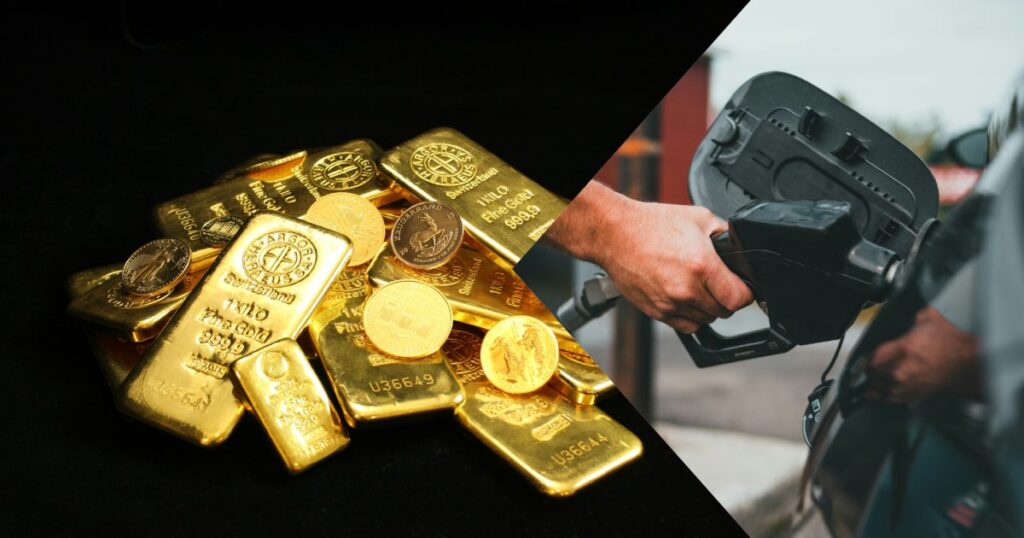
A stack of gold coins representing the value of Indian household gold savings.
Conclusion: Equality in Sacrifice
In conclusion, the growth of a nation is reflected in the prosperity of its citizens, not just in the luxury of its leaders. If the economy is as strong as shown on television, the public should not be pressured to “buy less, travel less, and eat less.” True progress happens when the sacrifice is shared equally by both the government and the governed. You can stay updated on these financial trends via reliable economic news sources.