Ethanol Water Footprint: Understanding the Hidden Environmental Cost
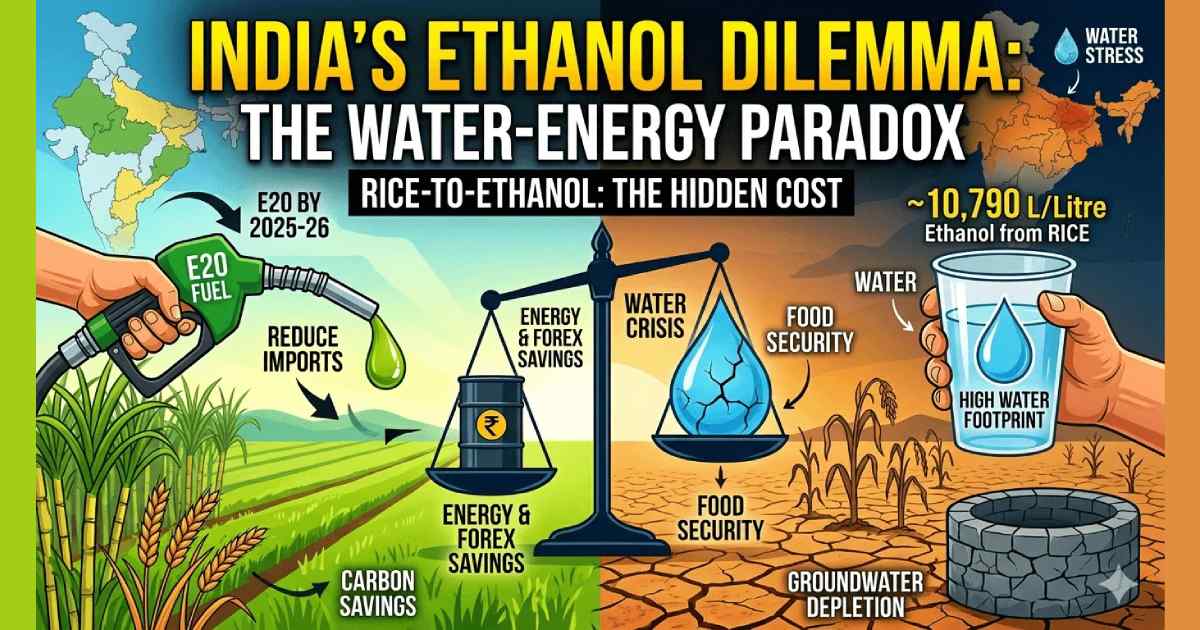
Ethanol water footprint analysis highlights a very critical paradox in environmental science and resource economics today. What we celebrate as a “green fuel” to reduce carbon emissions actually puts serious chemical and physical pressure on our water resources during its agricultural phase. While switching to biofuels helps lower tailpipe emissions, the sheer volume of water required to cultivate the source crops raises significant sustainability questions that we must address.
Understanding the ethanol water footprint is essential for balancing energy security with ecological preservation. When we analyze the lifecycle of biofuel production, it becomes clear that our push for cleaner air might inadvertently be accelerating a major water crisis in agrarian regions.
1. The Massive Water Footprint of Sugarcane
Sugarcane is a well-known “water-guzzler” crop, and it remains the primary source of biofuel production in India. The agricultural phase presents a massive challenge for our natural resources:
- The Consumption Math: To grow enough sugarcane to produce just $1\text{ L}$ of ethanol, farmers require approximately $2,500\text{ to }3,000\text{ L}$ of irrigation water.
- Geographical Crisis: States like Maharashtra and Karnataka, which lead in biofuel manufacturing, are already facing critical groundwater depletion. The rising demand for biofuel directly impacts the local water table both chemically and physically.
2. Corn vs. Sugarcane: A Chemical Comparison
Using corn for bioenergy is also becoming popular, but its resource mathematics present a different kind of challenge for the ethanol water footprint:
- The Corn Footprint: Producing $1\text{ L}$ of biofuel from corn consumes about $1,000\text{ to }1,200\text{ L}$ of water. While this is lower than sugarcane, corn cultivation requires a heavy application of nitrogen fertilizers.
- The Leaching Effect: The chemical residue from these heavy fertilizers mixes with rainwater and leaches into nearby rivers and underground aquifers. This qualitative damage drastically increases the broader ethanol water footprint impact through pollution.
3. First Generation (1G) vs. Second Generation (2G) Biofuels
Environmental scientists are now looking for solutions to this liquid resource crisis by transitioning from first-generation to second-generation technology:
- 1G Ethanol (Present): Made directly from food crops like sugarcane and corn, carrying the highest physical water cost.
- 2G Ethanol (Future): Manufactured from agricultural waste like stubble (parali), corn stalks, and bamboo. Since these are crop residues, they require no extra irrigation. This advances the chemical lifecycle of biofuels into a much more sustainable loop.
| Biofuel Generation | Primary Source Material | Average Water Required per Liter | Main Environmental Impact |
| 1G (First Gen) | Sugarcane / Corn | $1,000\text{ to }3,000\text{ L}$ | High groundwater depletion & chemical leaching |
| 2G (Second Gen) | Agricultural Residues / Stubble | Minimal / Zero Extra Water | Utilizes waste, reduces stubble burning |
4. The Chemistry of the “Green” Paradox
Biofuels are called “green” because, during combustion, they emit significantly lower levels of carbon monoxide ($\text{CO}$) and sulfur dioxide ($\text{SO}_2$) compared to standard petrol. However, evaluating the true ethanol water footprint requires looking at the entire net impact.
When we add the emissions from diesel pumps used for irrigation, chemical fertilizer manufacturing plants, and refinery processing, the net carbon and water balance becomes highly complex. To understand these deep ecological shifts, researchers closely monitor data from the Ministry of Environment, Forest and Climate Change and global bodies like the Water Footprint Network to evaluate long-term sustainability models.
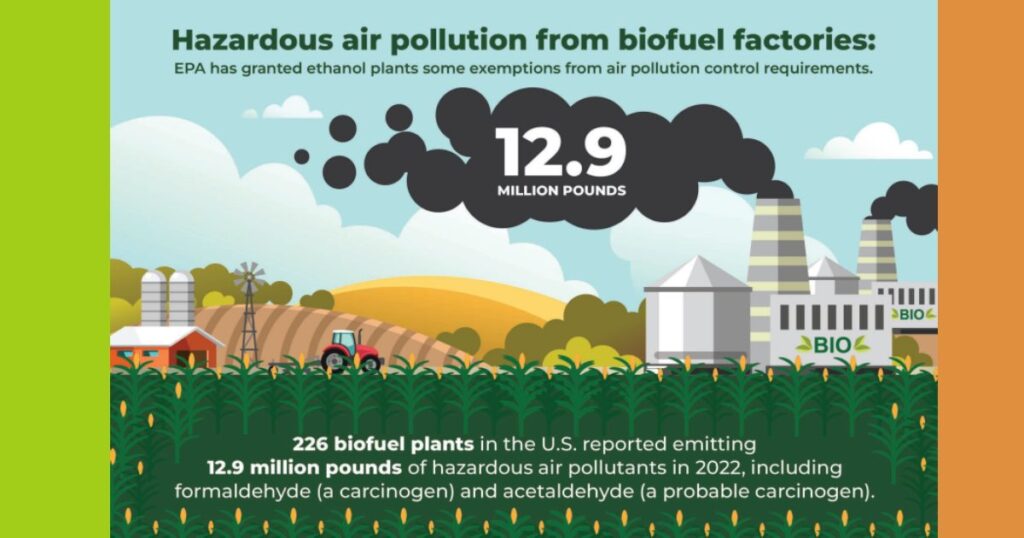
An irrigation channel feeding a crop field, highlighting the massive ethanol water footprint.
Conclusion: Moving Toward Sustainable Bioenergy
In conclusion, the ethanol water footprint reminds us that modern ecological solutions cannot be evaluated in isolation. A truly green fuel should not come at the cost of drying out our underground aquifers or polluting local rivers with chemical fertilizers.
By shifting our focus toward 2G technologies and optimizing agricultural water management, we can successfully reduce carbon emissions without triggering a severe water shortage. True sustainability lies in balancing our air quality goals with the preservation of our precious water resources.