
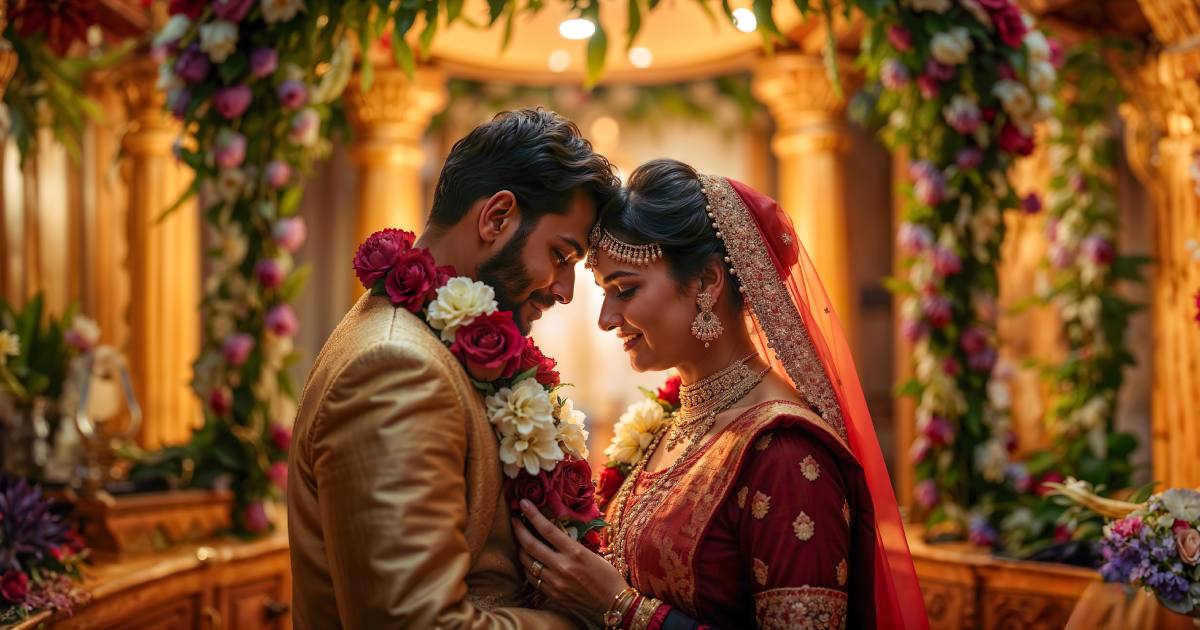
Late Marriages in Indian Society: Why Relationships Are Failing
Late marriages in Indian society have become a major topic of discussion today. Walk into any social gathering, and you will find parents deeply worried about their children’s future. Today, many unmarried girls up to the age of 27, 28, or 32 are sitting at home because their dreams are far beyond their actual status. There are many such examples around us. This delay is not just a personal choice anymore; it is altering our entire social structure and harming society’s overall image.
When discussing late marriages in Indian society, we must analyze the root causes. Let us look closely at why this trend is rising and how we can bring back the true meaning of a happy married life.
Materialism vs. Real Happiness
The modern matrimonial search feels less like finding a soulmate and more like a business transaction. The greatest human happiness is a happy married life. Money is also necessary, but only to a certain extent. Rejecting good proposals just because of money is completely wrong. The first priority should always be a happy home and a good, supportive family.
When parents go out looking for a match, the checklist has become endless, further driving the trend of late marriages in Indian society:
- The Property Check: Do they own a house? If yes, what kind of furniture do they have? How many rooms are there in the house?
- The Status Check: Do they have a car? If yes, which model is it? How is their lifestyle, eating habits, and standard of living?
- The Family Breakdown: How many brothers and sisters are there? Which child will the parents be a burden to after property division? How many sisters are there, and are they married yet? What is the nature of the parents? Are the family members and relatives modern-minded or not?
- The Physical & Digital Profile: What is the boy’s height? How is his looks and complexion? How much is his education, income, and bank balance? Are the boy and girl active on social media? How many friends do they have?
Ignoring good proposals in pursuit of excessive wealth is a blunder that fuels late marriages in Indian society. Wealth can be purchased, but virtues cannot. By the time all these inquiries and social media chats are completed, years slip away. Parents only seem to wake up when the children reach the age of 30. Then, this four-to-five-year race of running around is enough to ruin the youth of their children. Because of this, good matches slip away, and parents end up shattering the dreams of their own children.
The Cultural Impact of Late Marriages in Indian Society
When we delay marriages looking for the ‘perfect billionaire’, we forget the biological and emotional costs. Facing late marriages in Indian society means understanding that marriage after the age of 30 is often not a union, but a compromise. Even from a medical standpoint, it leads to numerous complications and health issues.
According to medical studies on reproductive health published by the World Health Organization (WHO), biological complications increase significantly for both men and women after their early 30s. Apart from the medical side, the emotional flexibility to adapt to a new family also reduces as people age, which is a major byproduct of late marriages in Indian society.
The Misuse of Kundali Matching
Today, superficial horoscope matching has overridden genuine human qualities, making the situation even worse. Just think about it—we often find situations where the kundali matches perfectly, but the family and the boy are not good. On the other hand, where the boy possesses all the ideal virtues, the kundali does not match. Because of this rigid astrological matching, we reject excellent proposals despite everything else being perfect, directly contributing to late marriages in Indian society.
We see broken homes everywhere today despite a perfect alignment of horoscopes. Think about it: even people who matched 20 out of 36 qualities, or even a perfect 36/36, are facing immense suffering in their lives. This happens because we failed to look at the actual human virtues of the boy. Astrologers and priests have pushed an educated, modern society back by a century! Good relationships are failing to happen just because of this obsession with horoscope matching.
The Illusion of a “Perfect Match”
Nowadays, when looking for a match for their daughter, people go out to buy a boy as if they are looking for 24-karat pure gold. In doing so, four to five years simply pass by. They waste precious time under the guise of higher education or finding the perfect high-paying job. This rigid mindset inevitably leads to late marriages in Indian society. The modern style of evaluating a prospective partner has become an unusual example of wasting time.

Ironically, when young adults get tired of this endless filtering by parents, they choose love marriages outside their traditional boundaries to avoid the cycle of late marriages in Indian society. Today, boys and girls of our society are openly moving towards other castes and blaming the system, claiming that there are no suitable boys or girls left within their own community. The underlying reason is that girls have crossed the extreme limits of modernism.
Interestingly, when these boys and girls marry out of their own free will, what happens to the kundali matching? At that time, nobody talks about horoscopes. The very same parents accept everything without a word. At that moment, no kundali, status, money, or income comes in between.
Looking Back to Move Forward
There was a time when marriages took place based on the reputation and values of the family, and late marriages in Indian society were rare. Those marriages lasted long. There was mutual respect and hospitality between the two families. They stood by each other through joys and sorrows, and truly understood the value of relationships.
Even if wealth and material luxuries were less, happiness naturally reflected in the courtyards of our homes. If any misunderstanding or conflict arose, the elders of the family would handle and resolve it together. The word ‘divorce’ did not even exist in relationships. Married life passed beautifully through sweet and sour experiences. Both partners became each other’s support system in old age and sowed the seeds of high moral values in their grandchildren. Where are those values today? Respect and modesty have become history, and situations now force people to compromise in relationships.
A Wake-Up Call for Parents: If parents do not wake up even now, the situation will become explosive. Society needs to understand that girls should get married around the age of 22, 23, or 24, and boys should be around 25 or 26. No single individual possesses all the virtues. Evaluate a person’s behavior and character before weighing their house, car, and bungalow.
If you want to read more about family structures and cultural shifts, you can check out the sociological reports on the Ministry of Culture, Government of India portal.
Conclusion
To curb the rise of late marriages in Indian society, parents must realize they are also drifting away in this wave of financial glamour. In this mad rush for money, relatives and close bonds have been left miles behind. Homes and families are breaking down. Mutual love and affection are drying up. This generation has made such a mockery of family systems that future generations will only read about moral values and culture in textbooks.
It is time to change our mindset. Let us prioritize good character, kindness, and compatibility over bank balances and complex astrological charts. Look for a good family and a good boy, but do not let excellent proposals slip away in the pursuit of excessive wealth. Choose to live a happy, fulfilled married life.